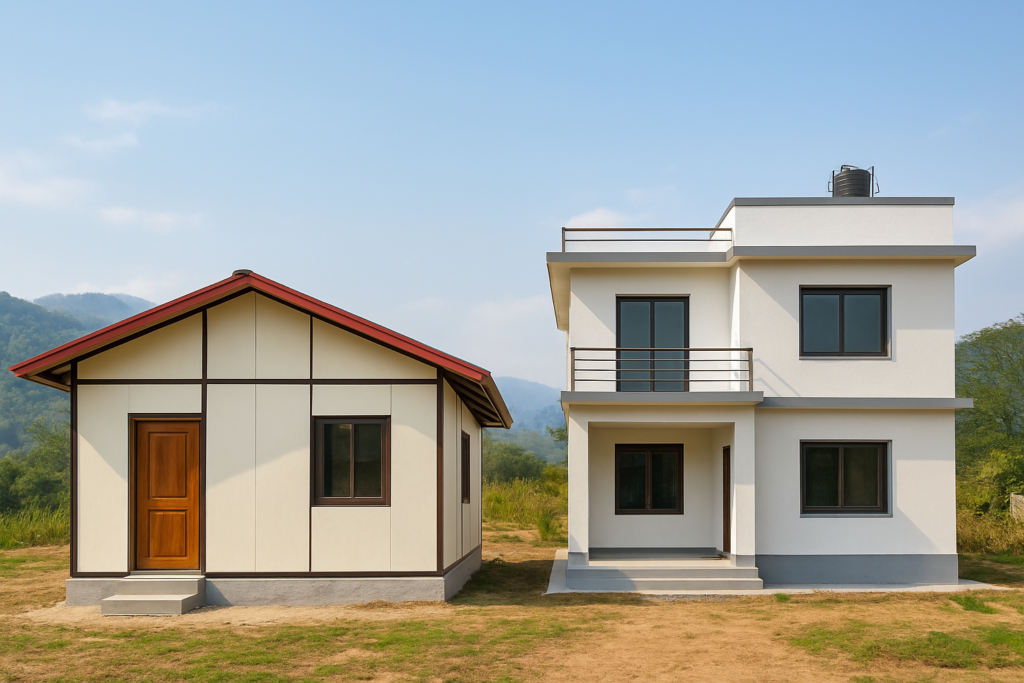
So you’re finally ready to build a house in Kathmandu. Maybe you’ve been sending remittances for years, dreaming of that family home back in the valley. Or perhaps you’re an NRN wanting a solid investment while keeping roots alive. I get it. I’m Aenish Shrestha, a civil engineer who’s helped countless NRN families turn that dream into bricks and mortar. But before you break ground, there are five non-negotiable things you must sort out. Miss these, and your ‘dream home’ might just become a cost-overrun nightmare. Let’s talk, straight from my daily experience on Kathmandu’s construction sites.
1. The Total Budget: It’s More Than Just Square Feet
You’ve probably heard someone say, “Construction here costs around NPR 3,000 per square foot.” And you did the math: my land is 1,000 square feet, so it’ll be NPR 30 lakhs, right? Wrong. That’s the single biggest misconception I see among NRN clients. The per-square-foot rate you hear is usually just for the basic shell—walls and roof. It doesn’t include interior finishes, boundary walls, landscaping, or even the kitchen. In Kathmandu, with its monsoon-proofing needs and NBC building codes, there’s always more. Drilling a deep foundation in Bhaktapur’s clay soil can eat up a chunk. Add retaining walls if you’re on a sloped plot, and the extras pile up fast. I always tell clients: calculate the raw construction cost, then add at least 25–30% for all the ‘other things’. That’s not padding—it’s reality. And while you’re at it, factor in a contingency fund for Nepal’s ever-fluctuating material prices. Cement and rebar don’t wait for your next remittance. So, do your homework with a detailed line-item estimate, not just a thumb rule.
2. Contract Types: Material & Labour or Labour-Only? Get It in Writing
In Nepal, you generally have two contract flavours: material-plus-labour (the contractor supplies everything) or labour-only (you buy materials, contractor provides workers). Both can work, but the trick is defining the scope in excruciating detail. I’ve seen too many friendly handshake deals sour because something like “plumbing does not include the septic tank hookup” was never clarified. Then when the dispute comes, you hear “aba bhai-go ni ta” (let it go)—but you shouldn’t. You’re spending a lifetime’s savings; you have every right to quality. A written contract, specifying every item from foundation depth to paint brands, is your best friend. Also, if you’re remitting from abroad, a labour-only contract means you or a trusted family member must handle constant material purchases. Material-plus-labour shifts that burden, but you must monitor progress. I recommend site photos daily and regular video calls. Bottom line: no contract, no construction.
3. Personal Home or Rental Property? Decide Now
Many NRNs build thinking they’ll use the whole house, but a few years later they consider renting out a floor. If you didn’t plan for that, retrofitting means demolishing walls, adding separate entrances, rewiring—messy, expensive, and plain annoying. I’ve seen clients spend extra lakhs because they didn’t clarify this upfront with their engineer. If you envision a rental unit, design it in from day one: separate meter, kitchenette, maybe even a different staircase. Kathmandu’s rental market loves well-planned, self-contained flats. Tell your engineer, “I want the ground floor rentable now or later,” and we’ll draw accordingly. That way, you get a future-proof home without the heartburn. Plus, with proper planning, you can even monetise a floor to fund part of the construction. Just be clear about your long-term intent.
4. Neoclassical or Modern? The Design Decision That Hits Your Wallet
Here in Kathmandu, these two styles dominate. Modern design is clean lines, minimal ornamentation, large windows, and flat or low-slope roofs. It’s quicker to build, requires less skilled labour for detailing, and generally costs less. Neoclassical, on the other hand, brings columns, cornices, arches, and intricate mouldings—beautiful, but it demands more craftsmanship and time. Every extra mould means more formwork, more cement, more painter hours. For a 2,500 sq. ft. house, the design choice can swing your budget by 15–20%. Think about maintenance too: all those classic details collect dust and need care during monsoon dampness. Both can incorporate earthquake-resistant features as per NBC 105, so that’s not a concern. Your taste, your budget. I often show clients side-by-side 3D renders of their plot with both styles to help the decision. Pick one and commit, because changing midway is the real budget killer.
5. Daily Site Records: Where’s Your Money Going?
Transparency during construction is rare in Nepal. Bricks arrive, cement bags get emptied, and by month-end you’re handed a vague bill. As an NRN, you can’t be on site, so you need a solid tracking system. That’s why I built the Construction Material Tracker app—it’s free on the Google Play Store. It lets you log every cement bag, every rebar bundle, every labour hour. You can see real-time material consumption, compare it against estimates, and catch discrepancies early. Even if you don’t use my app, maintain a shared Google Sheet with your site supervisor. Demand photos of delivery slips. A few minutes of daily updates save you from huge billing shocks. Think of it as your daily site punch-in, from anywhere in the world. Remember, trust but verify.
FAQs: Building a House in Kathmandu
What’s the average cost to build a house in Kathmandu?
Cost varies widely based on location, soil type, design, and finish. A basic to mid-range home might range from NPR 2,500 to NPR 4,000+ per square foot, but you must add interior, boundary walls, landscaping, and a contingency of 25–30%. Always get a detailed BOQ (bill of quantities) from a local engineer.
How long does it take to construct a standard house in Kathmandu?
For a 2–3 storey residential building, expect 12–18 months, not counting monsoon delays. Permit approvals and material shortages can stretch timelines, so plan for buffer months.
Can I build a rental floor without increasing the house’s total height?
Yes, often by designing a duplex-style rental within the permitted footprint and floor area ratio (FAR) as per NBC 103. Your engineer can plan a mezzanine or efficient layout to add a rentable unit without violating building codes.
How do I monitor construction remotely as an NRN?
Use a combination of daily photo/video updates, a material tracking app (like Construction Material Tracker), and weekly video calls with your contractor or a local project manager. Request all bills in digital format.
Which is more earthquake-resistant: modern or neoclassical design?
Both can be equally safe if they follow NBC 105 and are structurally engineered correctly. Earthquake resistance depends on the frame design (ductile detailing, column-beam connections), not the facade style.
I hope these five points clear some fog. Building a house in Kathmandu is a massive undertaking, but get these fundamentals right and you’ll be miles ahead of the typical chaos. I share more tips, behind-the-scenes site visits, and real client stories on my YouTube channel—hit subscribe so you don’t miss a thing. And if you’re ready to start designing, head over to AenishShrestha.com to see how I can help you plan a home that fits your life and budget. Happy building!