
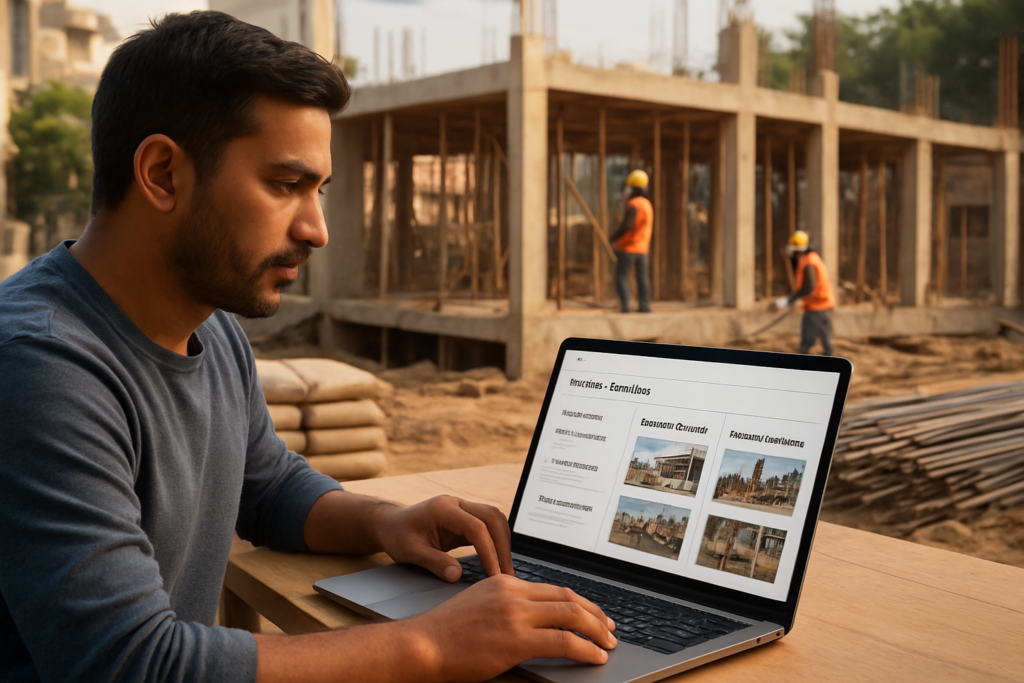
If you’re an NRN building your dream home back in Nepal, there’s one nightmare you hope never comes true: your contractor suddenly says the price has gone up. I’ve seen it happen on so many sites—what was promised at the start feels like a distant memory. You feel stuck, stressed, and often end up paying more than you ever planned. But I’m here to tell you that there’s a way to stay in control. Let’s talk about contractor cost overrun Nepal and the one tool that can save your wallet and your sanity: the contract paper.
Why Do Contractors Change Prices Midway?
You might be wondering, “Aenish, why does this even happen?” Based on my recent experiences on various construction sites, I’ve seen a few common reasons. Sometimes it’s genuine inflation—material costs can spike due to supply and demand. The price of cement, rods, bricks—they all fluctuate. Your contractor might have quoted based on old rates, and by the time construction starts, the market has shifted.
Other times, the scope of work wasn’t clear from the beginning. If you just said, “I need a good house,” without nailing down specifics, the contractor may interpret things loosely, and extras start piling up. That’s why the first major problem in Nepali construction is this gap between the initial quote and the final bill.
How to Protect Yourself: The Power of a Comprehensive Contract
The single best way to avoid contractor cost overrun Nepal is to have a well-drafted contract. Think of it as your legal shield. In our experience at Aenish Shrestha, we’ve seen that contracts reduce disputes drastically. Let me break down exactly what you need to include.
1. Define the Scope in Black and White
Before signing, go through every point. I cannot stress this enough—if a laywer is required, get one. Read each clause, understand it, and only then sign. The contract is your legal paper; if disputes arise, you can refer to it. So, define the scope clearly. What exactly is included? Excavation, foundation, electrical, plumbing—list them all. The more detailed, the better.
2. Specify Material Brands and Grades
Don’t just say “good quality cement.” In Nepal, brands like Shivam, Udayapur, or Jagdamba are common, but grade matters too. Specify: OPC or PPC, 43 or 53 grade. Do the same for reinforcement bars: Fe 500 or Fe 550? From which manufacturer? Panchakanya? Hulas? If you leave it vague, the contractor might choose cheaper alternatives and pocket the difference. Write it all down. This is one of the most effective ways to control cost overrun because it eliminates the “I thought you meant X” excuse.
3. Agree on Measurement Methodology
This is a big one. Different contractors measure work differently. Some use a measuring tape on site, some calculate from the drawing, and some—believe it or not—just eyeball it! The measurement style directly affects the bill. If your house has a slightly larger footprint than the plan, a drawing-based estimate might undercharge, but a tape measurement captures reality. Decide upfront: will we measure slab area by centerline or external dimensions? How do we calculate plastering? Include it in the contract. This prevents the classic “my measurement shows more, so you pay more” surprise.
Nepal-Specific Considerations for NRNs
Since many of you are living abroad while building here, there are extra layers to consider.
NBC Building Codes and Permissions
Make sure your design follows the National Building Code. If the contractor deviates and later says extra work was needed to comply, you could be on the hook. Having a structural engineer review plans and mention code compliance in the contract avoids that. At Aenish Shrestha, we always align with NBC 105 and 205 for residential buildings, especially in seismic zones.
Monsoon and Material Damage
Kathmandu’s monsoon can destroy exposed brickwork or stored cement. Does your contract state who bears the loss in case of weather damage? A smart clause can save you from paying for a contractor’s negligence during rains. Also, stockpiling materials during dry months when prices are lower might help, but only if storage is proper.
Remittance Timing and Cash Flow
Many NRNs send money in bursts. Contractors might slow down if funds aren’t available. While not a direct cost overrun, delays can increase indirect costs. A clear payment schedule linked to milestones—and penalties for unjustified delays—keeps everyone honest. That should be in your contract too.
What If Despite Everything, Costs Go Up?
Even with the best contract, genuine market hikes can happen. Some contracts include a price escalation clause tied to a government index, but in Nepal, that’s rare for residential projects. Usually, the contract locks the price. So, if the contractor insists, review the contract. If they signed a fixed price, they bear the risk—unless you changed the scope. Stay firm but polite, and refer to the written agreement. That’s why the paper is so important.
Frequently Asked Questions
Q: What is the main cause of contractor cost overrun in Nepal?
A: Based on what I’ve seen, the primary reason is lack of a clear contract. Without defined scope, material specifications, and measurement methods, misunderstandings grow into extra charges. Market inflation can also play a role.
Q: How can a contract help control construction costs?
A: A detailed contract fixes the scope, materials, and measurement technique. It serves as a legal reference, so both parties are bound to the agreed terms. If the contractor demands more, you can point to the contract and even take legal recourse if needed.
Q: Is it common for contractors to change prices after starting in Nepal?
A: Unfortunately, it’s quite frequent, especially when verbal agreements are the norm. That’s why I always insist on a written, signed contract before any work begins.
Q: What should an NRN include in a building contract in Nepal?
A: At minimum: detailed scope of work, brand and grade of all major materials, measurement methodology, payment schedule tied to milestones, and clauses for delays or material damage. Consulting a local engineer for NBC compliance is wise too.
Q: What if the contractor still demands more money despite the contract?
A: First, check if the extra work was outside the original scope. If not, the contract protects you. You can negotiate, but if they refuse, you may need to involve a mediator or legal help. Having a contract makes your position much stronger.
Building your home as an NRN doesn’t have to be stressful. With the right contract, you can turn “contractor cost overrun Nepal” from a threat into a thing of the past. For more honest, practical advice from someone who’s right there in the dust and cement, subscribe to my YouTube channel and follow along. And if you’re ready to start your project the right way, reach out to us at Aenish Shrestha. Happy building!