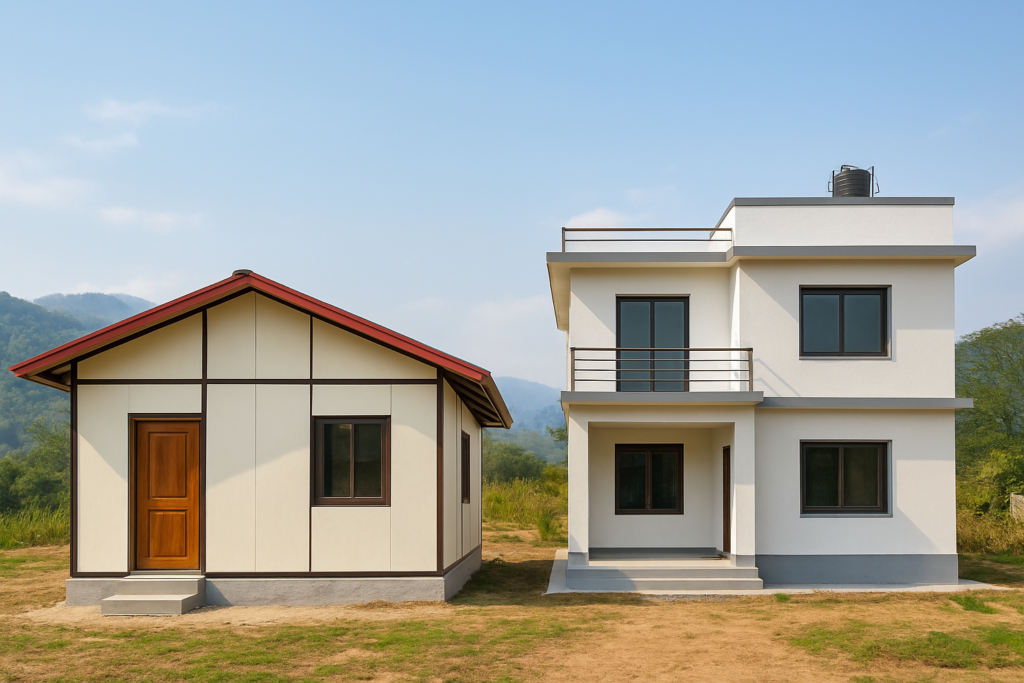
If you’re an NRN (Non-Resident Nepali) dreaming of building a home back in Nepal, you know the magic of maximizing a small plot. In this video, I took you on a tour of a recently completed residential house on just 4 aana in Kathmandu. It’s a perfect example of smart, client-focused design that doesn’t waste a single square foot. Let’s break down what made this project so special—and what you can learn for your own build.
Understanding 4 Aana Plot Size
First, let’s get on the same page. In Nepal, land is often measured in aana, where 1 aana equals 342.25 sq. ft. So a 4 aana plot is roughly 1,369 sq. ft. (about 127 sq. m.). That’s not huge, but with the right design, it’s more than enough for a spacious, modern family home. The key is vertical expansion and clever space utilization—which this house tour demonstrates beautifully.
Key Design Highlights from the Tour
The Open Staircase Feature
One standout element you’ll notice in the video is the open staircase. Not only does it look elegant, but it also plays a big role in natural light and ventilation. In a narrow plot, an enclosed staircase can feel like a dark tunnel. By opening it up, we created a sense of flow between floors and made the living area feel much larger. Plus, it allowed us to carve out a small storage space underneath—perfect for a puja room or mini pantry.
Client-Centric Layout Planning
Every design decision began with a simple question: What does this family actually do day-to-day? The ground floor has a seamless living-dining-kitchen arrangement, with just enough separation to avoid chaos. We placed the kitchen near the back for easy access to the utility yard, and oriented the living room to catch morning sun. Upstairs, the bedrooms are clustered around a common family lounge, doubling as a home office if needed. Because many NRN clients value rental potential, we even included a self-contained unit on the top floor with its own entrance—ideal for tenants or visiting relatives.
Building Code Compliance in Nepal
Let’s talk about something not always visible in a tour: the bones of the house. Nepal’s National Building Code (NBC) is strict for a reason—earthquakes. This structure follows NBC 105:2020 for seismic resilience. We used reinforced concrete frame with brick infill, proper lintel bands, and well-tied columns and beams. For a 4 aana plot, the NBC limits ground coverage to about 70% in many urban areas, meaning we built up rather than out. The staircase width, setback distances, and even window placements were checked against municipal guidelines. As an engineer, I don’t cut corners on safety; your peace of mind as an NRN investor is worth the extra care.
Monsoon-Ready Construction Tips
Nepal’s monsoon can be brutal. Heavy rainfall, driving winds, and occasional waterlogging test every home. During this project, we paid special attention to damp-proofing. The plinth beam sits a good 18 inches above ground level, and all external walls have a damp-proof course. We sloped the terrace and balconies just right so water drains instantly—no standing puddles. Gutters and downspouts are oversized for the typical Kathmandu downpour. Inside, we used anti-skid tiles in bathrooms and ensured cross-ventilation to reduce mold risk. A small detail: the main door has a tiny canopy to prevent rain from blowing in during a storm. These touches matter when you’re halfway across the world worrying about your home.
Why NRNs Choose Aenish Shrestha
Building from overseas is tough. You can’t just drop by the site every evening. That’s where I come in. I bridge the gap with regular video updates, transparent billing, and a genuine understanding of what NRN families need. Whether it’s a 4 aana build like this one or a larger project, I treat every house as if it were my own. The tour in this video shows the results: a livable, durable, and beautiful home that reflects the client’s personality—not just a cookie‑cutter design. If you’re ready to turn your remittance into a lifetime asset, let’s talk.
FAQ
What does it cost to build a 4 aana house in Nepal?
Costs vary widely based on finishes, location within Kathmandu, and current material prices. Typically, you’re looking at a range from basic to premium tiers. I always recommend budgeting for unexpected rainfall delays or market fluctuations. A detailed estimate comes after we discuss your specific requirements.
Do I need any special permits for a 4 aana house?
Yes. You’ll need municipal building permit, and if you’re in a heritage or restricted zone, additional clearances. I handle this paperwork on behalf of my NRN clients, coordinating with ward offices and engineers to ensure everything is in order before breaking ground.
How long does construction take from start to finish?
A well‑managed 4 aana residential project usually takes 10–14 months, depending on weather and labor availability. We plan around the monsoon so foundation and roof work happen in drier months. Regular progress reports keep you in the loop even from abroad.
Can I incorporate traditional Newari or modern elements in a small plot?
Absolutely. In fact, we did subtle traditional touches in this house—like carved wooden brackets on the façade and a jhingati tile accent. On a narrow plot, it’s about balance. Too much ornamentation can feel heavy, so I guide clients toward a fusion that honors heritage without overpowering the space.
Is a 4 aana house safe during earthquakes?
When built to NBC standards, yes. This house uses ductile detailing, strong beam‑column joints, and proper foundation depth. No building is 100% earthquake‑proof, but following the code dramatically reduces risk. I personally supervise all structural works to ensure compliance.
Want to see more projects or discuss your dream home? Subscribe to my YouTube channel for weekly house tours and construction tips. Or browse more detailed guides right here on Aenish Shrestha. Let’s build something remarkable together.